Skip to content
Lexington Foundation Repair

Serving Lexington and nearby areas

Sloping Floors in Lexington, KY

Sloping or sagging floors in a Lexington home usually mean something underneath has dropped or weakened, and a free inspection finds the cause and gives you a written price.

Book a free foundation inspection

Tell us what you are seeing. A local specialist calls you back the same business day.

Local to Lexington

We connect property owners in Lexington and nearby areas, including Gratz Park, Ashland Park, Chevy Chase, Hamburg, Nicholasville and Georgetown, with one independent local foundation repair specialist.

  • Wet soil, weak footing

    The Kentucky Geological Survey says water from drains, sprinklers or leaking lines can soak the clay under a foundation and make it swell, pushing the house out of plumb over time.

  • Muggy summers

    In summer 2018, Blue Grass Airport logged nearly 1,400 hours with a muggy dew point of 65 degrees or more. Damp air under a house softens wood over the years.

  • Decades of wear

    About 1 in 3 Lexington homes were built from 1950 to 1979. Floor framing that old has had decades of damp seasons.

What it costs

Typical published ranges for Lexington. The contractor's written estimate is the price, and the inspection is free.

WorkTypical range
Inspection and written estimate Free
Sagging floor repair $1,000 to $5,000
Repair or replace a floor joist $100 to $300per joist
Support beam $1,500 to $5,000per beam
Steel or helical pier under a sinking wall $1,000 to $3,000per pier

See typical foundation repair prices in Lexington

What sloping floors look like

Sloping floors creep up slowly. Many people notice them by accident. These are the common clues:

Things roll

A marble, a ball or a kid's toy rolls to one side of the room.

A dip in the middle

The center of a room sits lower than the edges, often over a hallway or a center wall.

A bouncy spot

The floor flexes or shakes when you walk across it.

Gaps at the baseboard

A gap opens between the floor and the baseboard on one side.

Doors that swing

A door that swings open or shut by itself, or rubs at the top corner.

Cracked tile

Floor tile or grout cracks in a line across the room.

Furniture that rocks

A cabinet or bookcase that leans away from the wall.

Why floors slope in Lexington

A floor sits on a frame of joists and beams. That frame sits on posts and on the foundation walls. If any one of those drops or weakens, the floor follows.

Posts and piers sink. Many Lexington homes sit over a crawl space or a basement with posts holding up a center beam. Those posts often sit on small footings in clay soil. Maury soil, common in the Inner Bluegrass, has a subsoil of silty clay loam to clay. When that clay gets wet and dries out, season after season, a small post footing can sink.

Wood softens. Damp air under a house is hard on wood. Lexington summers are muggy. In 2018, Blue Grass Airport logged nearly 1,400 hours with a dew point of 65 degrees or more. A damp crawl space can lead to mold and rot in joists and beams, and soft wood sags.

The foundation wall moves. The Kentucky Geological Survey says water from drains, sprinklers or leaking lines can soak the clay under a foundation and push the house out of plumb. If one outside wall sinks, the whole floor on that side tilts.

Old framing. About 1 in 3 Lexington homes were built from 1950 to 1979. Some older homes have joists spaced wide or cut for old plumbing. Decades of load can leave them sagging.

When it is minor and when it is urgent

Watch it. A slight slope that has been there for years and does not change. No new cracks or sticking doors.

Book an inspection soon. A slope that is getting worse. A bouncy spot. A musty crawl space. Doors that started sticking this year.

Call right away. A floor that dropped fast. A post that is leaning, cracked or no longer touching the beam. Soft, crumbling wood under the floor. A dip near a tub, toilet or heavy appliance.

How sloping floors get fixed

The inspector goes under the house to find the low point and the reason for it.

Adjustable steel posts. New steel jacks on proper footings replace sunken or rotted posts. They can be raised slowly to lift the floor back toward level.

Sistering joists. A new board is bolted alongside a weak or cracked joist. This makes it strong again without tearing out the floor.

New beam or extra supports. If posts are too far apart, an added beam or more posts shorten the span so the floor stops bouncing.

Fixing the moisture. If damp air or water caused the rot, a vapor barrier, a dehumidifier or drainage work keeps it from coming back.

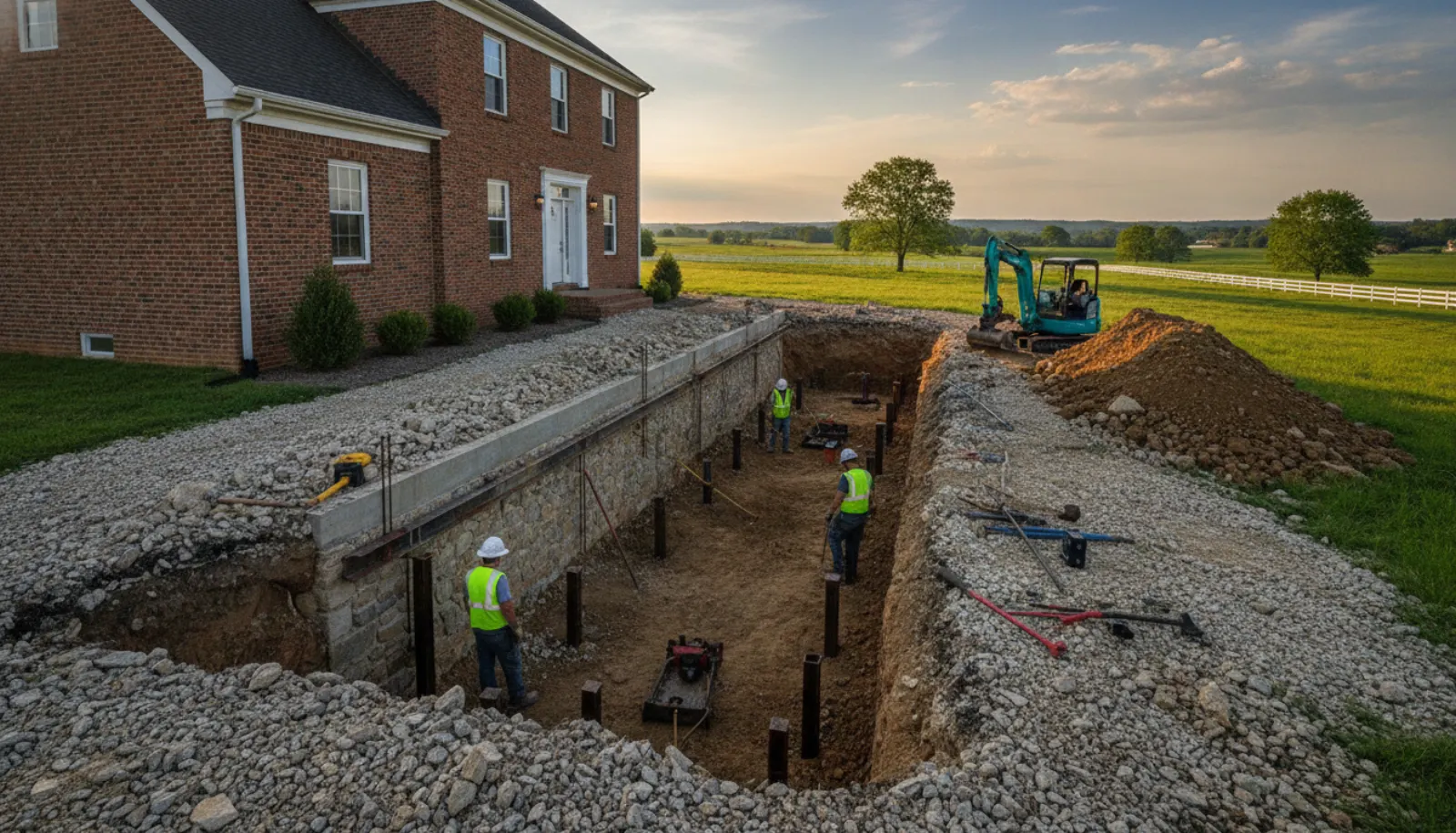
Foundation piers. If an outside wall is sinking, piers under that footing may be needed before the floor can be leveled.

What it costs

The table shows typical ranges from national cost guides. Most sagging floors are fixed from below with posts and joist work. Pier work costs more and is only needed when a foundation wall is sinking.

What to do before the inspection

  1. Roll a marble in each room and note where it goes.
  2. Mark doors that stick or swing on their own.
  3. Clear a path to the crawl space door or basement so the inspector can get under the floor.
  4. Note any musty smell or standing water below.
  5. Keep heavy furniture or water-filled things off a soft or bouncy spot.

Frequently asked questions

Is a sloping floor normal in an old house?

Some slope is common in older homes and may have been there for decades. What matters is whether it is getting worse. A floor that slopes more each year, or comes with new cracks, should be checked.

How do I check if my floor is sloping?

Set a marble or a round pencil on the floor and watch where it rolls. A long level or a phone level app also works. Check the same spots again in a few months.

Can a sloping floor be leveled?

Often, yes, at least part of the way. Crews raise the floor slowly with jacks so walls and doors are not stressed. Old sag that has set in may not come all the way back.

My floor feels bouncy but not sloped. Is that the same problem?

It is related. A bouncy floor often means a weak or rotted joist, or a post that is too far apart from the next one. It is usually fixed from the crawl space or basement.

Is it the foundation or just the floor framing?

It can be either. If the outside walls are level and only the middle of the floor dips, it is often posts or beams. If a whole side drops, the foundation wall or footing may be sinking.

Call (859) 681-6936 or send the short form to book a free inspection under your floors.

(859) 681-6936 Free inspection